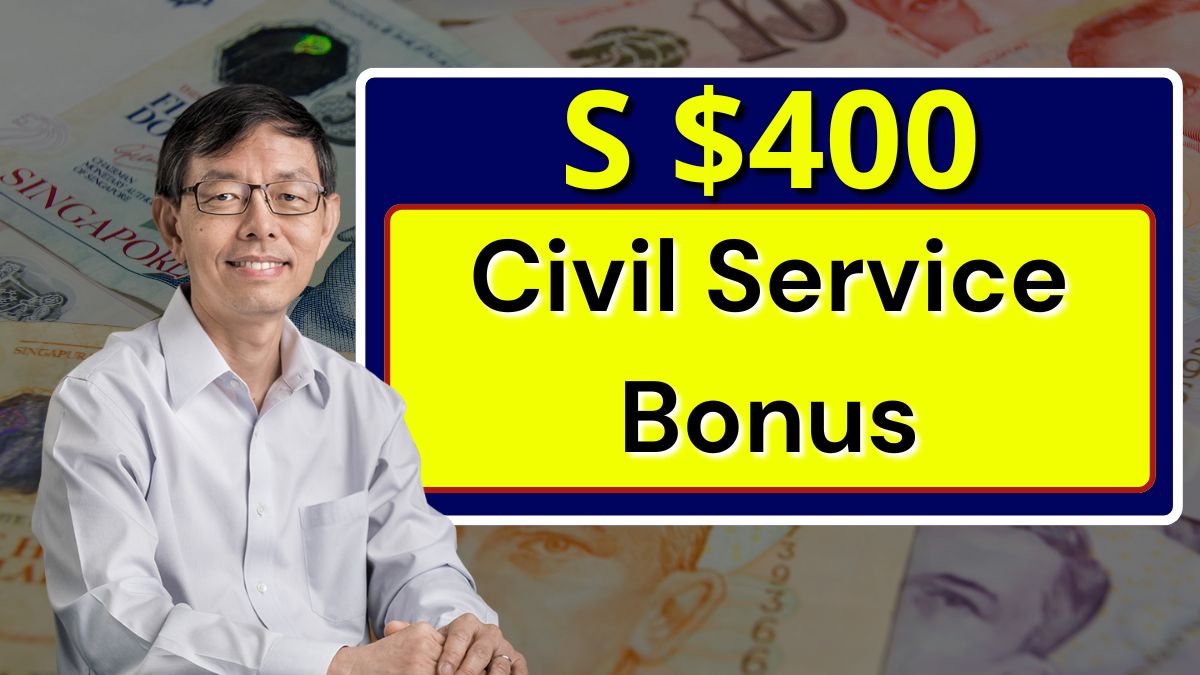
Every June, one topic quietly takes over Singapore’s coffee breaks and WhatsApp chats — the civil service bonus. Whether you work in the public sector or not, you’ve probably heard someone ask, “Eh, how much bonus the government give this year?”
For thousands of civil servants, the annual bonus isn’t just extra cash — it’s a reflection of how the nation’s economy is doing and how much the government values its workforce. So, what’s the story in 2025?
Mid-Year Bonus for 2025: Here’s What’s Confirmed
The Public Service Division (PSD) announced on June 16, 2025, that civil servants will receive a 0.4-month mid-year bonus, part of their Annual Variable Component (AVC).
On top of that:
- Junior officers (MX13(I) and MX14) will get a one-time $250 payment, and
- Officers in grades MX15, MX16, and the Operations Support Scheme (OSS) will receive $400.
According to PSD, this modest payout reflects Singapore’s slow first-quarter growth and a subdued outlook for the rest of the year.
If you’re wondering — yes, this bonus is separate from the 13th-month pay (Non-Pensionable Annual Allowance) that every civil servant receives annually.
How Does It Compare to Past Years?
Let’s put things in perspective. Last year, civil servants received a 0.45-month mid-year bonus and a 1.05-month year-end AVC, plus a $600 one-time payout for junior staff.
Over the past decade, civil service bonuses have typically ranged between 2 to 2.5 months’ salary (including the 13th month). The only exception was 2020, when COVID-19 froze all variable bonuses.
Here’s the trend in simple terms — when Singapore’s GDP grows, bonuses rise. When the economy slows, payouts shrink. 2025 clearly leans toward caution rather than celebration.
How Private Sector Bonuses Might Follow
Interestingly, many private companies use civil service payouts as a benchmark. If the government keeps bonuses conservative, the private sector often mirrors the same restraint.
Still, some industries are defying the trend. Transport and precision engineering remain strong in 2025, and firms there may pay slightly higher bonuses to retain skilled staff. But for retail and consumer sectors, expectations remain modest.
So, while civil servants can count on their steady pay, those in volatile industries might see smaller year-end rewards.
AWS vs Bonus: Why It’s Not the Same Thing
Here’s a common confusion: the AWS (Annual Wage Supplement) — also called the 13th-month pay — is not the same as a performance bonus.
Think of it this way:
- AWS = A fixed extra month’s pay, part of your employment package.
- Bonus = A variable reward, based on company or individual performance.
Neither is legally required under the Ministry of Manpower (MOM), but most public and private employers still give them to attract and retain talent.
The Takeaway: Stability Over Surprise
The Civil Service Bonus 2025 isn’t record-breaking, but it’s steady — and that’s the point. It shows the government’s commitment to maintaining stability even in softer economic times.
While civil servants might not be celebrating windfalls this year, they can still count on consistency — and that’s worth something in today’s uncertain world.
Frequently Asked Questions
1. How much is the Civil Service Bonus 2025?
Civil servants will receive a 0.4-month mid-year bonus, plus a one-time payment of $250 or $400 depending on their grade.
2. Will there be a year-end bonus in 2025?
The year-end bonus hasn’t been announced yet. It typically depends on Singapore’s GDP performance in the second half of the year.
3. Is the 13th-month bonus part of the Civil Service Bonus?
No. The 13th-month pay (AWS) is separate and guaranteed, while the civil service bonus (AVC) varies based on economic performance.
 Join WhatsApp